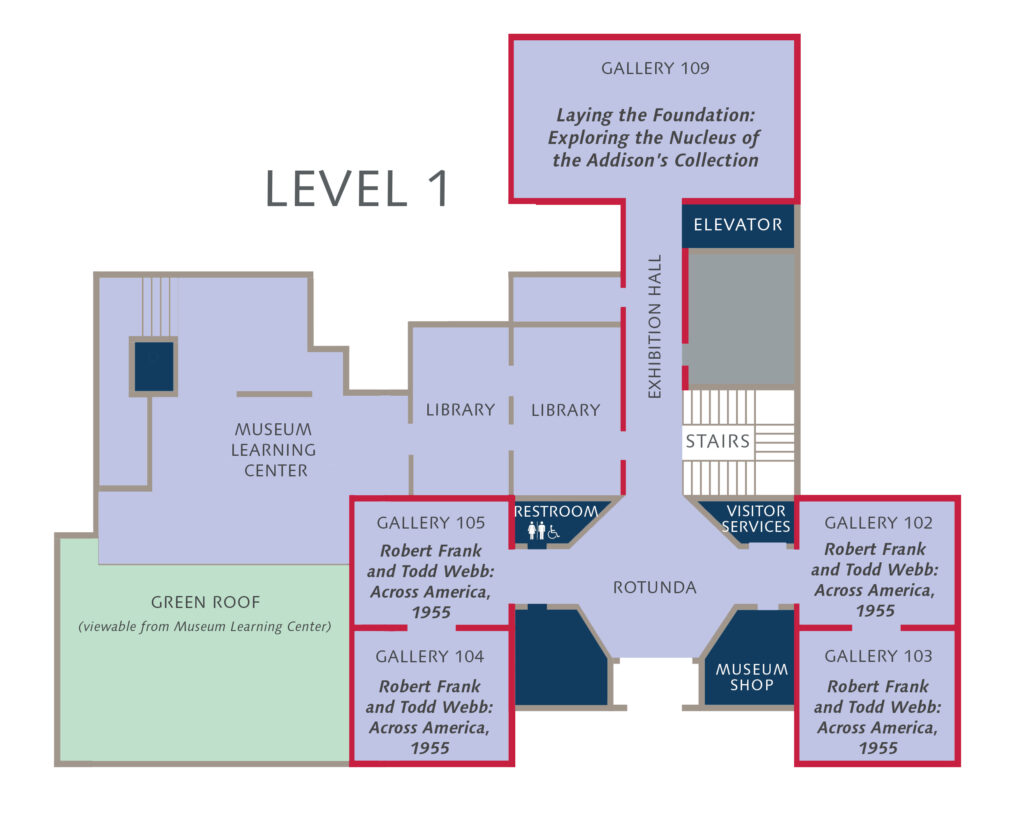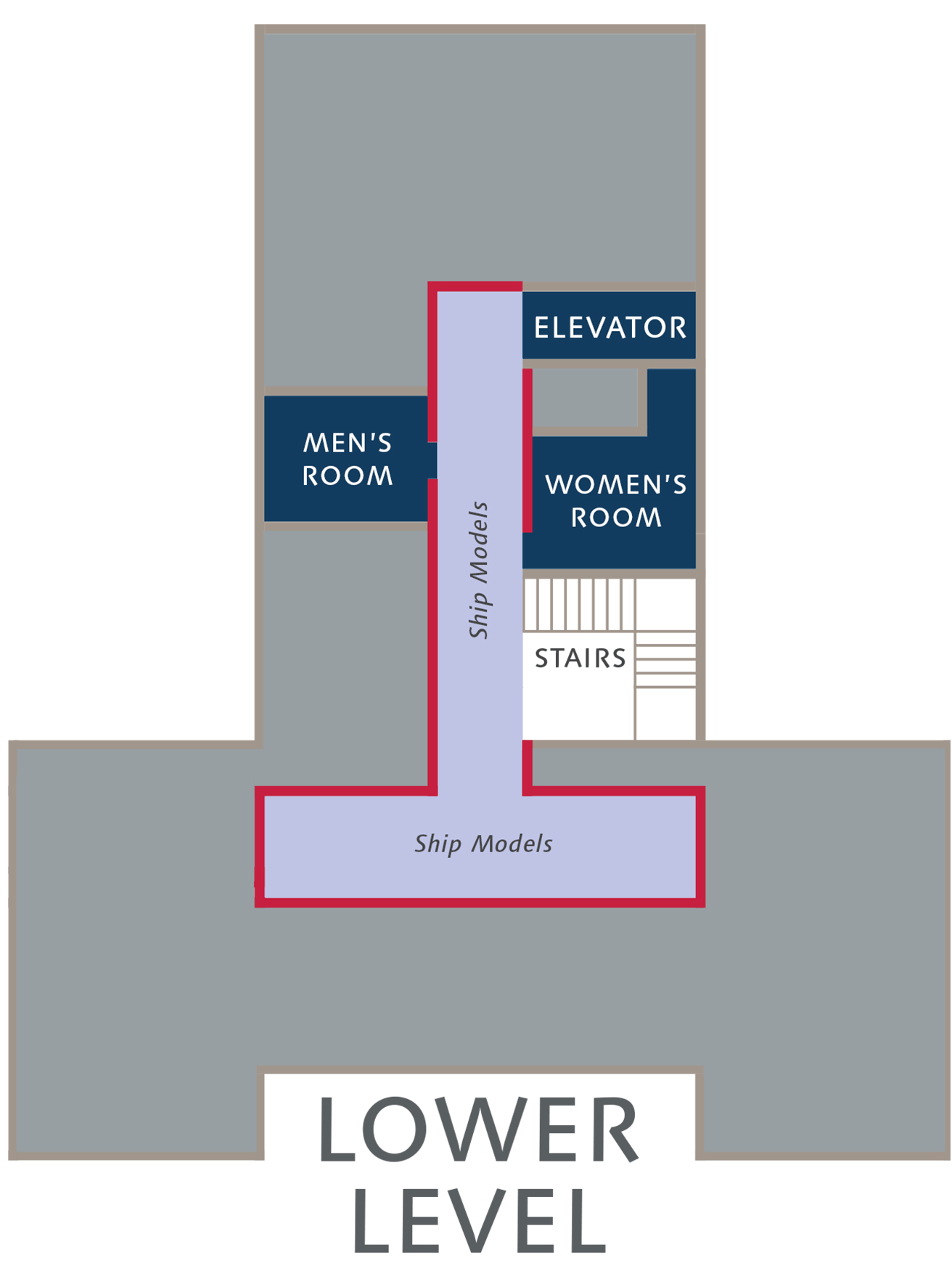
Gallery Map

On View

Both Sides of the Line: Carmen Herrera & Leon Polk Smith (2/21–7/31/26)

Parasol Press: Breaking New Ground (1/24–7/31/26)

In Focus: Winslow Homer: Watching, Waiting (1/26/26–7/31/26)

Playing to Our Strengths: Highlights from the Permanent Collection (1/31–7/31/26)

Martin Puryear: In Print (1/31–7/31/26)

Little Boxes (2/7–7/31/26)

Welcome Home (3/3–7/31/26)

Models of American Sailing Ships (permanently on view)


Exhibitions on view

Permanently installed works of art

GalleryGuide.4.6.22.indd
Dale Chihuly, Black Niijima Floats, 2010
Dale Chihuly, Black Niijima Floats, 2010. Glass. Purchased as the gift of R. Crosby Kemper (PA 1945) through the R. Crosby Kemper Foundation in memory of Harry C. Morgan (PA 1945), 2010.96a-j. Photo: Jeff Goldberg/Esto
1 of 9
Paul Manship, Venus Anadyomene, 1927
Paul Manship, Venus Anadyomene, 1927. Marble, 28 5/8 x 22 inches. Gift of anonymous donor,
fountain restoration funded by Mary and Keith Kauppila, 1930.291
2 of 9
Maria Oakey Dewing, A Bed of Poppies, 1909
Maria Oakey Dewing, A Bed of Poppies, 1909. Oil on canvas, 25 1/8 x 30 1/8 inches. Addison Gallery of American Art, Phillips Academy, Andover, Massachusetts, gift of anonymous donor, 1931.2

Playing to Our Strengths: Highlights from the Permanent Collection (1/31/26–7/31/26), the third iteration of this series, explores how American artists of the late 19th and early 20th centuries grappled with the inherently contradictory nature of modern life, laying bare the tensions between appearance and reality as well as the orderly and the chaotic. The exhibition unfolds across four distinct galleries, presenting an idealized vision of American life featuring Impressionist and American Renaissance paintings with Pictorialist photographs; Ashcan School and social realist photographs; detailed geometric Precisionist works, and works that expose the complex and frequently disordered lived realities of interwar New Yorkers navigating a rapidly modernizing and frequently alienating city.

3 of 9
Ralston Crawford, Lifeboat Davit, 1940
Ralston Crawford, Lifeboat Davit, 1940. Oil on canvas, 40 x 32 inches. John P. Axelrod (PA 1964) Acquisition Fund, 2025.119

Playing to Our Strengths: Highlights from the Permanent Collection (1/31/26–7/31/26), the third iteration of this series, explores how American artists of the late 19th and early 20th centuries grappled with the inherently contradictory nature of modern life, laying bare the tensions between appearance and reality as well as the orderly and the chaotic. The exhibition unfolds across four distinct galleries, presenting an idealized vision of American life featuring Impressionist and American Renaissance paintings with Pictorialist photographs; Ashcan School and social realist photographs; detailed geometric Precisionist works, and works that expose the complex and frequently disordered lived realities of interwar New Yorkers navigating a rapidly modernizing and frequently alienating city.

4 of 9
Bill Owens, How can I worry about the damned dishes when there are children dying in Vietnam, 1972
Bill Owens, How can I worry about the damned dishes when there are children dying in Vietnam, 1972. Gelatin silver print, 8 x 10 inches. Gift of Katherine D. and Stephen C. Sherrill (PA 1971, and P 2005, 2007, 2010), 2006.77.31

Welcome Home (3/3/26–7/31/26), asks What is home? How does it shape you? How do you shape it? Artists have long explored these difficult questions, capturing the idea of home and belonging in ways both tangible and abstract. Visitors are invited to ponder their own ideas of home in this exhibition curated by Phillips Academy students enrolled in Art 400 Visual Culture: Curating the Addison Collection.

5 of 9
 
Winslow Homer, Eight Bells, c. 1887
Winslow Homer, Eight Bells, c. 1887. Etching on wove paper, 19 x 24 1/2 inches. Museum purchase, 1935.52

In Focus: Winslow Homer: Watching, Waiting (1/26/26–7/31/26) examines the Boston-born artist’s persistent engagement with and interrogation of the twinned themes of watching and waiting across his fifty-year career. Homer’s oeuvre reflects a lifelong preoccupation with observation and contemplation.

6 of 9
Martin Puryear, Shoulders (State 2), 2005
Martin Puryear, Shoulders (State 2), 2005. Softground etching with drypoint and chine collé. Printed and published by Paulson Bott Press. Gift of William M. Drake, Jr. (PA 1950) and JoAnn Carney Drake, 2025.159

Martin Puryear: In Print (1/31–07/31/26) examines the Boston-born artist’s persistent engagement with and interrogation of the twinned themes of watching and waiting across his fifty-year career. Homer’s oeuvre reflects a lifelong preoccupation with observation and contemplation.

7 of 9
Mary Lee Bendolph, Lonnie Holley's Freedom, 2005
Mary Lee Bendolph, Lonnie Holley’s Freedom, 2005. Etching and aquatint on paper, 40 5/8 x 40 3/4 inches. Gift of William M. Drake, Jr. (PA 1950) and JoAnn Carney Drake, 2025.103

Little Boxes (2/7–07/31/26) features works from the Addison’s collection, and invites viewers into a nuanced exploration of the square and the rectangle, two essential geometric forms that have served as powerful tools in artistic expression. The exhibition explores how the simple “box” serves both as a practical strategy for pictorial composition and as a symbolic container for complex narratives.

8 of 9
H. E. Boucher Mfg. Company, Flying Cloud, 1930
H. E. Boucher Mfg. Company, Flying Cloud (1851), 1930. Ship model, 44 x 72 inches. Addison Gallery of American Art, Phillips Academy, Andover, MA, gift of George Jordan, 1931.S7
9 of 9
2nd floor map
Robert Mangold, A Red, from the portfolio Three Aquatints, 1979
Robert Mangold, A Red, from the portfolio Three Aquatints, 1979. Aquatint and etching. Courtesy of the artist. © Robert Mangold / Artists Rights Society (ARS), New York; Photo: Frank E. Graham

Parasol Press: Breaking New Ground (1/24/26-7/31/26) is the first exhibition to survey the publisher’s remarkable publications from 1970–2014, this exhibition showcases radical innovations that pushed the boundaries of printmaking and secured Parasol’s place as one of the most important print publishers of the twentieth century. Parasol’s published editions were among the decade’s most ambitious prints, demonstrating the complex and varied ways artists explored the materiality of printed surfaces while challenging the medium’s limits.

1 of 7
Ida Applebroog, #1, 1982, from Executive Tower, West Plaza, 1982
Ida Applebroog, Untitled, from Executive Tower, West Plaza, 1982. Soft ground etching and aquatint. Private collection, Portland, Oregon, © 2026 Ida Applebroog; Photo: Frank E. Graham

Parasol Press: Breaking New Ground (1/24/26-7/31/26) is the first exhibition to survey the publisher’s remarkable publications from 1970–2014, this exhibition showcases radical innovations that pushed the boundaries of printmaking and secured Parasol’s place as one of the most important print publishers of the twentieth century. Parasol’s published editions were among the decade’s most ambitious prints, demonstrating the complex and varied ways artists explored the materiality of printed surfaces while challenging the medium’s limits.


2 of 7
Richard Estes, Qualicraft Shoes, 1974
Richard Estes, Qualicraft Shoes, 1974. Screenprint. Addison Gallery of American Art, Phillips Academy, Andover, MA, gift of Edwin Marks, 1979.20. © Richard Estes. Courtesy of Schoelkopf Gallery, New York; Photo: Frank E. Graham

Parasol Press: Breaking New Ground (1/24/26-7/31/26) is the first exhibition to survey the publisher’s remarkable publications from 1970–2014, this exhibition showcases radical innovations that pushed the boundaries of printmaking and secured Parasol’s place as one of the most important print publishers of the twentieth century. Parasol’s published editions were among the decade’s most ambitious prints, demonstrating the complex and varied ways artists explored the materiality of printed surfaces while challenging the medium’s limits.


3 of 7
Sol LeWitt, Wall Drawing #713: On a vaulted ceiling, 20 irregular five-sided figures, January 1993
Sol LeWitt, Wall Drawing #713: On a vaulted ceiling, 20 irregular five-sided figures, January 1993. Color ink wash and India ink. Gift of the artist, 1993.49. Image © 2014 The LeWitt Estate / Artists Rights Society (ARS), NY. Reproduction, including downloading of Sol LeWitt works is prohibited by copyright laws and international conventions without the express written permission of Artists Rights Society (ARS), NY.
4 of 7
Leon Polk Smith, Six Involvements in One, 1966
Leon Polk Smith, Six Involvements in One, 1966 (recto of Seven Involvements in One, 1966), acrylic on canvas mounted on wood panel, 6 panels: 86 5/8 × 157 1/2 × 1 5/8 inches overall, Private collection. Image courtesy Lisson Gallery,
© Leon Polk Smith Foundation

Both Sides of the Line: Carmen Herrera & Leon Polk Smith (2/21/26-7/31/26), organized by the University of Michigan Museum of Art, explores how artists Carmen Herrera and Leon Polk Smith redefined the visual language of modern art. Their perspectives intersect, diverge, and resonate, offering new ways to understand abstraction, identity, and the power of friendship.

5 of 7
Leon Polk Smith, Okie, 1957
Leon Polk Smith, Okie, 1957, oil on canvas, diameter: 31 1⁄4 inches, Leon Polk Smith Foundation. Image courtesy Lisson Gallery, photo: Mark Waldhauser, © Leon Polk Smith Foundation

Both Sides of the Line: Carmen Herrera & Leon Polk Smith (2/21/26-7/31/26), organized by the University of Michigan Museum of Art, explores how artists Carmen Herrera and Leon Polk Smith redefined the visual language of modern art. Their perspectives intersect, diverge, and resonate, offering new ways to understand abstraction, identity, and the power of friendship.

6 of 7
Carmen Herrera, Untitled, 1950
Carmen Herrera, Untitled, 1950, acrylic with graphite with cord on burlap, 23 1⁄2 × 41 1⁄2 inches, Collection of Christine Eng, New York. Image courtesy Lisson Gallery, © Estate of Carmen Herrera

Both Sides of the Line: Carmen Herrera & Leon Polk Smith (2/21/26-7/31/26), organized by the University of Michigan Museum of Art, explores how artists Carmen Herrera and Leon Polk Smith redefined the visual language of modern art. Their perspectives intersect, diverge, and resonate, offering new ways to understand abstraction, identity, and the power of friendship.

7 of 7
L. A. Pritchard, Model by L.A. Pritchard after plans by R. C. Anderson, Mayflower, c. 1936

The Addison Gallery’s famed model ship collection, permanently installed in the building’s lower level, consisted originally of 24 works commissioned by the museum’s founder, Thomas Cochran, to document four centuries of American history. 

1 of 1


Addison Artist Council logo

Bartlett H. Hayes Prize Recipients

2023:

Reggie Burrows Hodges

Exhibition | Residency | Publication | Acquisition